I was nervous that day. I still remember it clearly.
The first big hackathon
X-Hack 3.0 was a hackathon run by CS50x Nepal at national level, and it was my first big one. I’ll be honest, I had no real idea what I’d signed up for. I was a freshman who barely knew how to turn an idea into a project, split the work between teammates, or build something decent against a deadline. I knew we had to make something. Knowing that and knowing where to start felt like two different planets.
There were four of us: my friend Gaurav Shah (Zang), two seniors, Spandan Guragain (Spidey) and Rasa Bhattarai, and me. We named our project Sanjaya.
Figuring it out as we went
At the start we were mostly guessing. What do we build? How do we even approach it? How do we make all the pieces work together? And how do you work as a team when everyone is still learning?
Spandan dada made the biggest difference here. He guided us through almost every part of it. He helped us see how to approach the project, how to organise the work, and what to do next when we got stuck. As a beginner, I can’t tell you how much it helps to have someone who can take a confusing mess and show you the next step. I’m still grateful for it.
A hackathon teaches you tech, but it also teaches you how to learn under pressure. You don’t have to know everything before you begin. You can start, ask questions, listen to people who know more than you, and work it out together. That was one of the first real lessons I got about building something with a team.
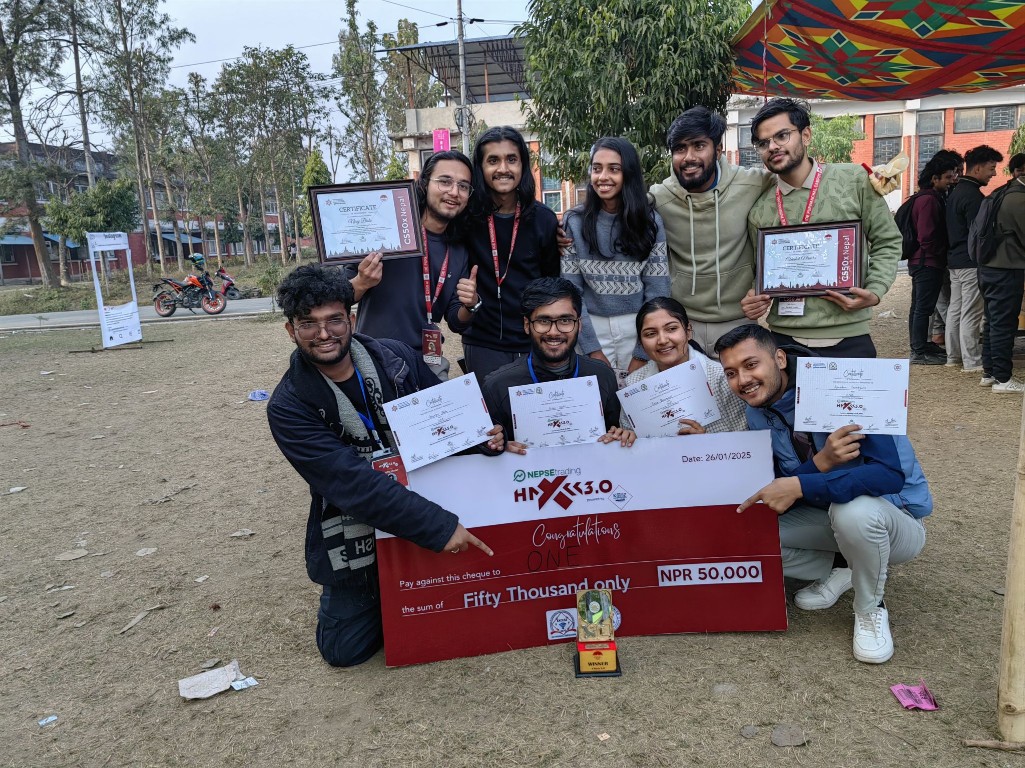
“Nabin bhai will pitch.”
Then came the pitch. Spandan dada said something like, “Nabin bhai will pitch our idea in front of the judges.”
Me? I panicked a little. Explaining your team’s work to a room of judges is nothing like talking it over with your teammates. You have to gather your thoughts, speak clearly, and make strangers understand why your idea matters. There wasn’t time to overthink it, so I just did it. I stood up and pitched.
It sounds small now, but for the freshman I was, it wasn’t. Someone had seen a bit more in me than I could see in myself, and he trusted me with it. I’m glad he did. That pitch stayed with me long after the event ended.
The phone call
When it was over, I wasn’t expecting anything. We left the venue and went our separate ways, and by the time I got home I figured that was it. We’d taken part, built something, learned a lot, and survived our first big hackathon. That already felt like enough.
Then my phone rang. Someone told me to come back to the venue. I felt a little guilty for leaving in the first place, so I went back, still with no clue what was waiting.
We had won. Weeeee!
I can still feel how excited I was. We won X-Hack 3.0 and took home NPR 50,000 and a shiny trophy. For a bunch of students who started out unsure what to build or how to work together, it felt unreal.
The money and the trophy were nice. What hit me harder was that we had actually done it. We took an idea, pushed through the uncertainty, learned from each other, presented it, and somehow won a competition we hadn’t expected to win. That gave my confidence a huge boost.
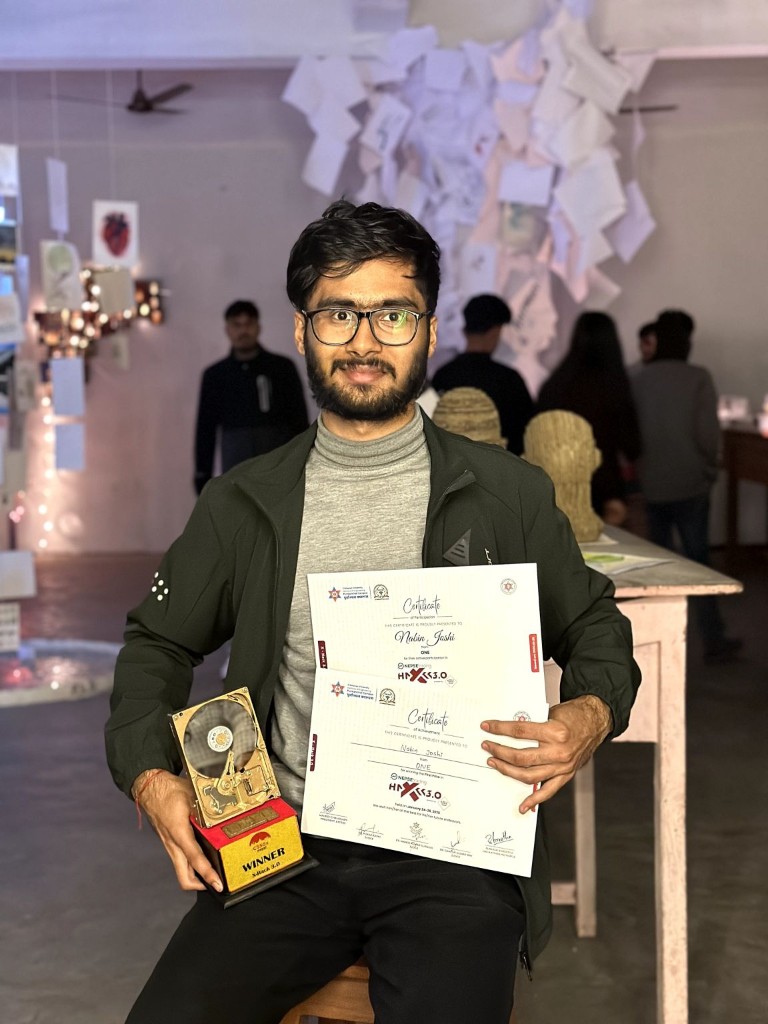
After the trophy
I think every student sometimes wonders whether they’re good enough. You look at people with more experience, more knowledge, and more confidence, and you feel miles behind. You hold back from taking on responsibility because you aren’t sure you’re ready. That’s exactly how I felt going into X-Hack 3.0.
The win didn’t turn me into an expert developer, and I still get nervous. What it gave me was a reason to believe I could take on a challenge even when I wasn’t sure of myself. Being a beginner doesn’t mean you have nothing to offer. Working with people who know more than you speeds up your learning. And sometimes the most important thing you can do is say yes when someone gives you a chance.
I also saw how much a good teammate or mentor can shape your path. Spandan dada’s guidance, working with Gaurav, and being on a team with Rasa dada all went into making that weekend special. We won together, but each of us took home our own lessons.
Why it still matters
When I look at Sanjaya now, I don’t see an old project sitting in a GitHub repo. I see one of my first times building something under pressure, working through uncertainty with a team, and presenting an idea to people who would judge it. It showed me that growth often starts before you feel ready.
Thank you, Gaurav Shah (Zang), Spandan Guragain, and Rasa Bhattarai, for being part of it. A special thanks to Spandan dada for guiding me and for trusting me to pitch when I was still looking for my confidence.
X-Hack 3.0 gave us a trophy and NPR 50,000. What I took home was something a prize cheque can’t hold: the confidence to keep trying.
Since then I’ve worked on more projects, joined more events, and found new interests across robotics, software, and AI. There has been plenty more to learn and plenty more nervous moments. But I’ll always remember the first time: the scared freshman, the pitch I didn’t see coming, the phone call, the walk back to the venue, and the moment we found out we’d won.
Your first big win tells you that you did something well, and it also makes you start to believe you might be able to do a lot more.
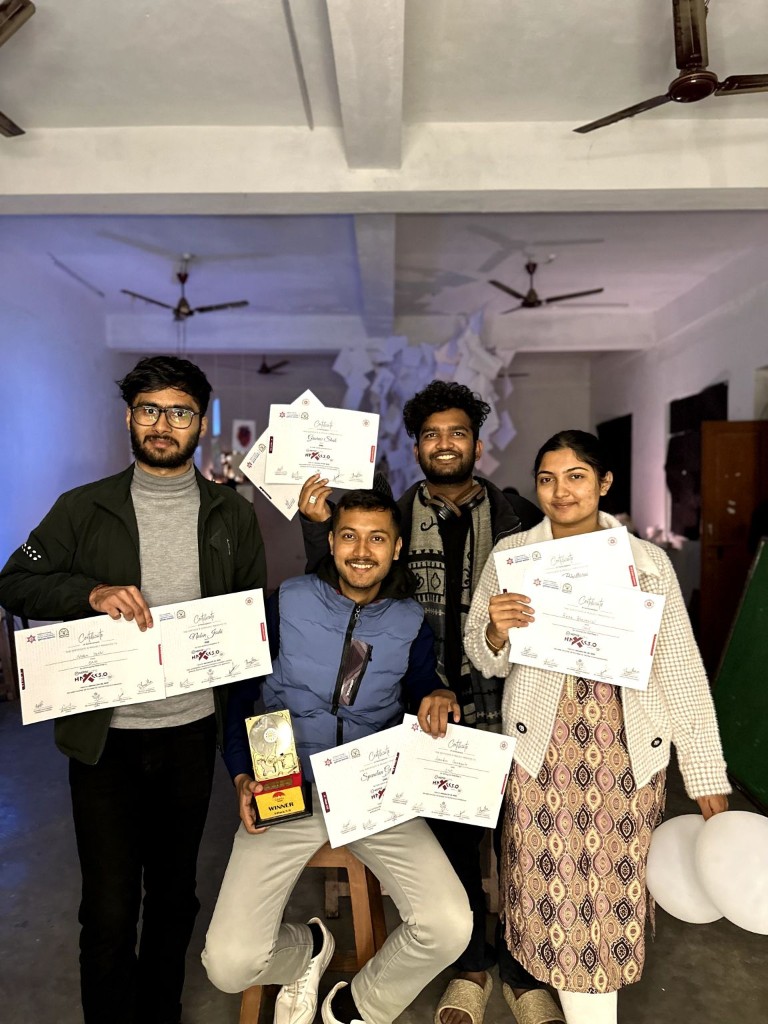
Explore Sanjaya
A first hackathon, a nervous pitch, and a team that made the win possible.